
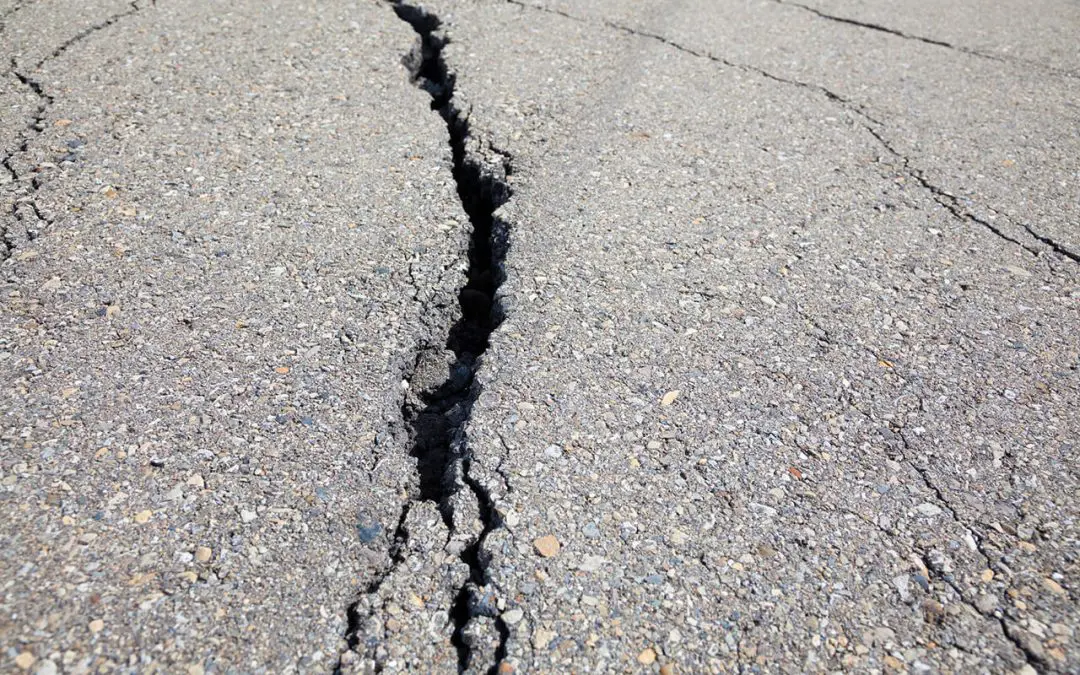
Driveway damage follows a predictable progression that goes from inexpensive to expensive to address based almost entirely on timing. A small crack that could be filled for a few dollars becomes a pothole that requires patching, resurfacing, or eventual replacement. Understanding when to fix driveway damage yourself and when to call a professional makes the difference between a surface that lasts for decades and one that requires premature replacement.
How to Fix Driveway Cracks Before They Become Bigger Problems
The most common driveway repair task is crack filling. The approach varies slightly between asphalt and concrete, but the underlying principle is the same: seal the crack before water gets in and accelerates the damage. For asphalt driveways, liquid crack filler handles cracks up to half an inch wide. Clean the crack first with a wire brush or compressed air, then apply the filler slightly overfull and allow it to cure before traffic. Cracks wider than half an inch need a cold-patch asphalt product troweled in and compacted before the filler stage. Attempting to fix driveway cracks with filler alone in oversized cracks produces a result that fails quickly.
For concrete driveways, hydraulic cement or a concrete crack filler addresses hairline to moderate cracking. Cracks along control joints are often sealable with a flexible polyurethane sealant that moves with the slab through temperature cycles rather than cracking again with a rigid filler. Any concrete crack that is actively widening, lifting on one side, or crumbling at the edges warrants professional assessment before any attempt to fix.
When to Fix Driveway Damage With Resurfacing
There’s a point in any driveway’s life when the scope of damage exceeds what spot repair can address effectively, when the number of cracks, the depth of pitting, or the extent of surface deterioration makes a comprehensive approach more appropriate. Asphalt resurfacing, applying a fresh layer over an existing base that’s still structurally sound, is the mid-life intervention that restores a driveway’s surface without the cost of full replacement. It’s appropriate when the base is intact, and damage is confined to the surface layer. A crumbling base means resurfacing addresses appearance without fixing the structural problem, and replacement becomes the more honest recommendation.
Concrete resurfacing with a poured overlay applies similarly when the slab is sound, but the surface has deteriorated through scaling or widespread shallow cracking. Surface preparation is critical, which is why professional execution produces more reliable results. Sealcoating for asphalt, applied after crack filling rather than as a substitute for it, extends surface life by protecting against UV degradation and water infiltration.
The Problems That Require Professional Assessment
Some driveway conditions are beyond DIY scope because the underlying cause needs to be understood before the surface is addressed. Significant heaving, sections lifted substantially relative to adjacent areas, is almost always caused by tree root intrusion or frost heave. Patching the surface without addressing the root or drainage conditions produces a repair that fails repeatedly. A professional will assess whether the cause is addressable and what the realistic repair scope looks like. Large sinkholes or soft spots that flex underfoot indicate subsurface failure. These require excavation, base repair, and repaving. Attempting to fix driveway sinkholes from the top produces a cosmetic result over an unresolved structural problem.
Frequently Asked Questions (FAQs)
How do I know if I should repair or replace my driveway?
The structural integrity of the base is the determining factor. Surface damage over a solid base is a repair candidate. Widespread alligator cracking, soft spots, significant heaving, or drainage problems saturating the base point toward replacement. Age matters too: an asphalt driveway approaching 20 to 25 years has often reached the point where repeated repairs are less economical than a single replacement.
What’s the best time of year to fix driveway cracks?
Late spring through early fall is the ideal window; temperatures between 50°F and 90°F allow fillers and sealcoats to cure properly. Cold temperatures prevent adhesion; extreme heat could cause fillers to run before setting. For urgent repairs outside the ideal season, use products formulated for cold-weather application and allow extra curing time before traffic.
How long do driveway crack repairs typically last?
Well-executed crack filling on a stable base lasts three to seven years before reapplication, depending on climate and traffic. Longevity depends heavily on whether the crack is stable or actively progressing.
Can I fix driveway damage myself or does it require a contractor?
Crack filling, small pothole patching, and sealcoating are within DIY capability. Resurfacing, significant pothole repair, base repair, and work involving heaving or sinkholes benefit from professional assessment. The general threshold is scope: small surface repairs respond well to homeowner attention; structural or widespread damage warrants professional evaluation first.
Does fixing driveway cracks actually prevent further damage or just cover it?
Done correctly, crack filling prevents the water infiltration that accelerates damage. Done incorrectly, it covers damage without preventing its progression. The preparation step is as important as the material, which is why cleaning thoroughly before filling isn’t optional.
TMK Inspections offers inspection services in Southeast Pennsylvania. If you’re buying or selling a home, contact us to request an appointment.